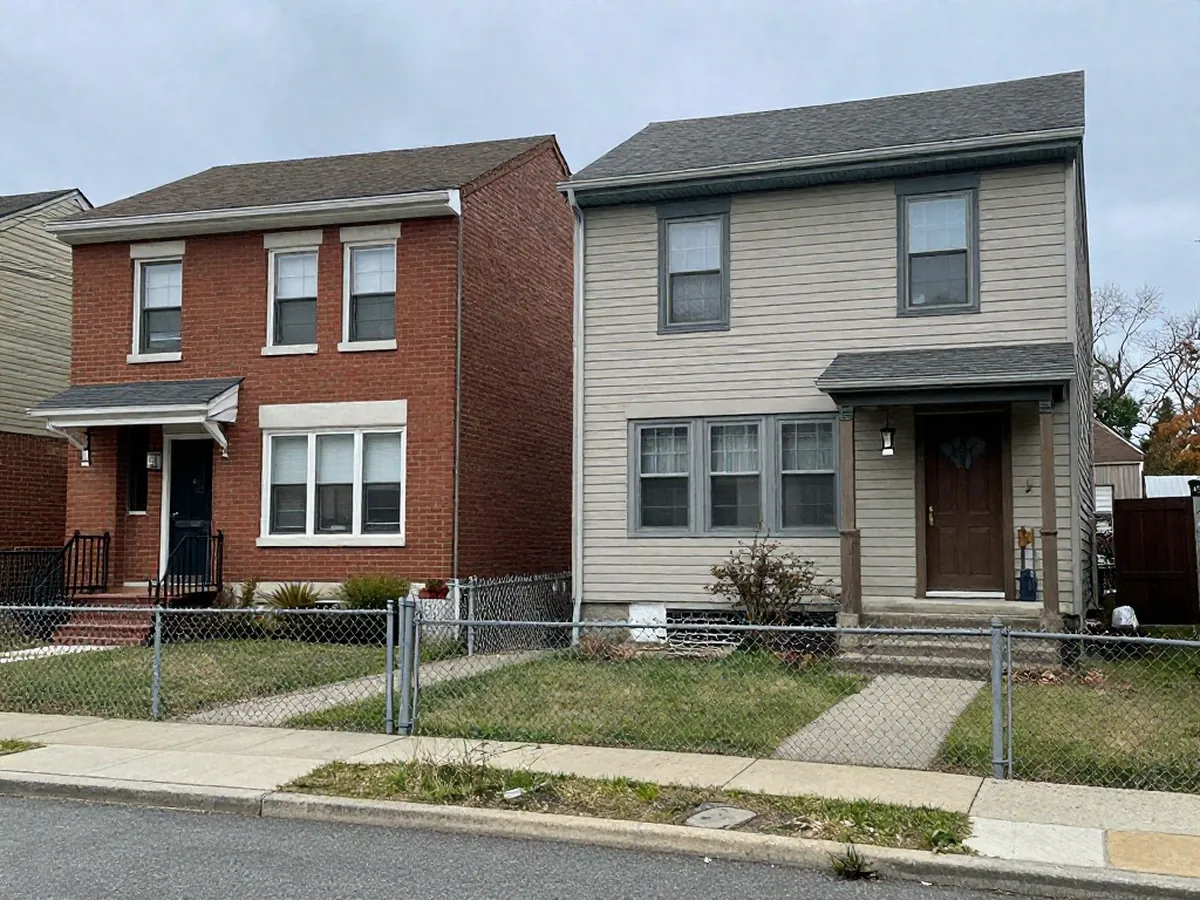
Why the building comes before the shingles
Before a roofer asks about shingles, the useful question is what kind of building the roof sits on. Census estimates for 2020-2024 sort Lyndhurst's 9,704 homes (plus or minus 506) into 4,063 detached houses, 461 attached houses, 2,884 two-unit buildings, 600 three- or four-unit buildings and 1,675 in buildings of five or more units.
The counts say nothing about any single roof. They do explain why a phone call from Lyndhurst so often starts with a question about who lives under it and who owns the building.
Detached houses: every joint is yours to point out
A detached house has the most open walls, and a roofer will want to hear about each place where the roof meets something: a dormer, a chimney, a porch roof. According to the Energy Department's Building America Solution Center, every roof-wall intersection needs flashing, and those joints are a high-risk point for water entry.
FEMA's shingle fact sheet gives installers the same instruction in fewer words: take care with roof-to-wall flashing. Photographs of each joint, taken from the ground, save a roofer a first visit.
Attached houses: the neighbor's wall
Lyndhurst has an estimated 461 attached houses. Where a roof runs into a wall that two properties share, the flashing sits against a wall that is partly someone else's concern. Ask the roofer how that joint will be sealed and whether the neighbor needs to hear about the work before siding or brick is touched.
The state's ordinary-maintenance wording for roof covering names detached one- and two-family dwellings. Nothing read explains how attached houses are treated, so the question goes to the township's Construction Department.
Two-family buildings: two ceilings, two sets of eyes
The 2,884 two-unit buildings are the biggest single group after detached houses. A stain upstairs and a stain downstairs may come from the same joint or from two different ones, so a roofer will ask both households what they have seen.
It also helps to know who in the building owns the roof decision. A tenant who spots a stain passes the photographs and the date to the owner, and the owner makes the call.
Larger buildings and flat tops
Buildings with three or more units total about 2,275 of Lyndhurst's homes by the Census count, and many larger roofs have low-slope sections. The asphalt roofing trade group calls water that stays for 48 hours or longer ponding, and recommends at least a quarter inch of slope per foot so water drains.
In a building with a manager or association, the manager arranges the roof. A resident's job is to report what they see, with a date and a photograph.
The detached garage
A garage is not counted as a home, so the Census figures skip it, and it is not a dwelling in the state's maintenance wording either. Two things follow. A flat garage roof needs the drain checked, and the state's ice-barrier bulletin leaves detached accessory structures that have no heated or cooled floor space out of the membrane requirement.
The flat roof repair page covers ponding and seams in more detail.
Six building types against four questions
| Building | Lyndhurst homes (Census estimate) | Point this out to the roofer | Question to put to the roofer |
|---|---|---|---|
| Detached house | 4,063 | Every dormer, chimney and porch roof | Which joints get new flashing? |
| Attached house | 461 | The wall shared with the neighbor | How will that joint be sealed, and who is told? |
| Two-family building | 2,884 | Stains on both floors, with dates | Has the other household seen a stain too? |
| 3 or 4 units | 600 | Any flat or low-slope section | Where is the drain, and who clears it? |
| 5 or more units | 1,675 | Any flat section, and who manages the roof | Who approves the work? |
| Detached garage | Not counted as a home | The drain and any puddle after rain | Does water stand for 48 hours or more? |
Which building is yours?
If the answer is a detached house, start with the joints and the ground-level checks on the roof inspection page. For a two-family building or an attached house, gather both households' photographs first, then read roof repair for the usual first steps.
Once the building type is clear, call (551) 209-3947 and describe the roof, the address and whatever you can make out from the ground.
From
- U.S. Census Bureau, ACS 2020-2024 5-year, Table B25024, Lyndhurst township
- Building America Solution Center (U.S. DOE), Flashing of roof-wall intersections in existing homes
- FEMA, Home Builder's Guide to Coastal Construction, Technical Fact Sheet No. 7.3, Asphalt Shingle Roofing for High-Wind Regions
- Asphalt Roofing Manufacturers Association, Ponding water basics (10 Mar 2017, modified 4 May 2020)
- NJ Department of Community Affairs, Bulletin 07-3, Ice Dam Membrane/Ice Barrier (rev. June 2015)
- Cornell LII, N.J.A.C. 5:23-2.7, Ordinary maintenance
- NJ Department of Community Affairs, Significant changes to minor work and ordinary maintenance (alert, 5 Mar 2018)
- Township of Lyndhurst Code, Chapter 8, Building and Housing (eCode360)
- U.S. Department of Energy, Repairing Roofs and Ceilings technical brief (Jan 2006)
Checked 1 Nov 2026