Ice at the roof edge, and the water behind it
Ice Dam Damage Repair in Lyndhurst, NJ
Ice dam damage in Lyndhurst, NJ follows a freeze and a thaw: a heavy band of ice at the eave, a row of long icicles, then a ceiling stain once water backs up behind the ice. Call (551) 209-3947 and mention where the stain showed up, and a local roofer can arrange a visit to look at the shingles, the flashing and the gutters once the ice is gone.
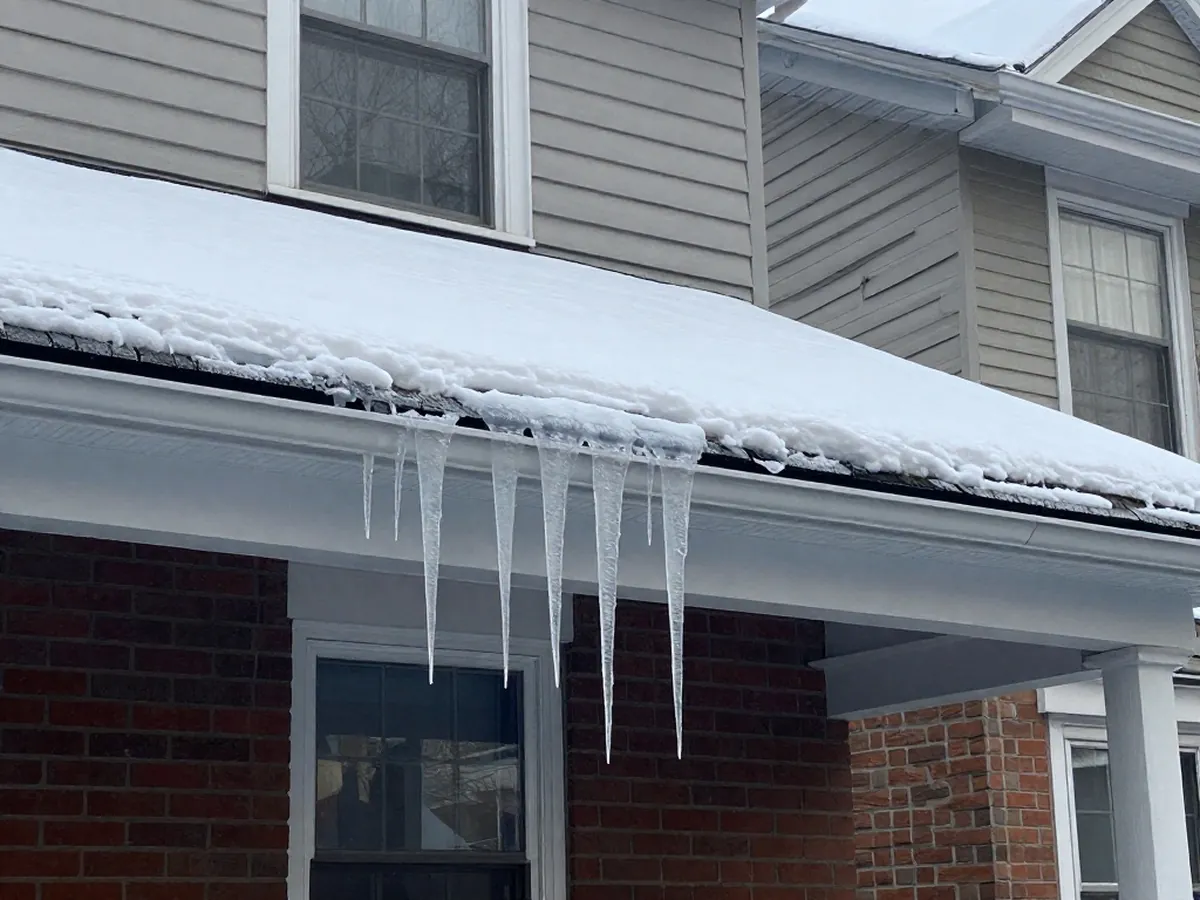
Looks from the ground
Each of these looks is made from the ground or at a window. A ladder, a wet slope or a steep pitch belongs to the roofer.
- From the yard, photograph the ice and the icicles on each side of the house, with the date. The slopes that carry ice often sit over the warmest rooms.
- Watch the ceilings and the tops of outside walls for the next few days. Stains tend to appear after the thaw starts.
- Under the attic hatch, look at the insulation around light fixtures and the hatch itself. Warm air leaking through ceiling openings is what the University of Minnesota's guide calls often the main driver.
- Leave interior repairs alone until the ceiling is dry. The same guide advises waiting until ceilings and walls are dry before fixing them.
Leave it and make the safety call if
- A wire sags under ice or lies in the yard: keep away, and report it to 911 and to PSE&G, whose emergency line is 1-800-436-7734.
- Big icicles hang above an entry, a path or the driveway: keep people and pets from walking beneath them, and call 911 only if one has fallen on someone.
- Someone proposes to climb up and chip the ice off: do not allow it. The University of Minnesota guide warns that anyone on a roof in winter risks injury.
- A ceiling bulges with water, or a light fixture is wet: get out of the room, and call 911 at any spark or burning smell.
Ice on the eaves: one to ten
- 8 to 10
water drips from a light fixture, a ceiling bows down, or a wire sags under the ice. Safety lines first, then call (551) 209-3947 about the roof once the area is clear.
- 4 to 7
a ceiling stain that appeared during the thaw, or shingles and gutters that look pushed up at the edge. Photograph them from the ground and call (551) 209-3947 this week, before the next freeze sets another dam.
- 1 to 3
icicles with no stain anywhere inside. Take photos for the record and keep an eye on the ceilings during the next thaw.
Three questions about this job
How does an ice dam form?
Is an ice barrier required on a Lyndhurst re-roof?
What helps over the long run?
Signs this is the job
- A heavy buildup of ice at the lowest edge of the roof
- A row of long icicles hanging from the gutter line
- A ceiling or wall stain along an outside wall after a thaw
- Gutters bent down, or shingles lifted at the eaves
- Damp insulation seen from the attic hatch after a warm spell
The roof side and the attic side
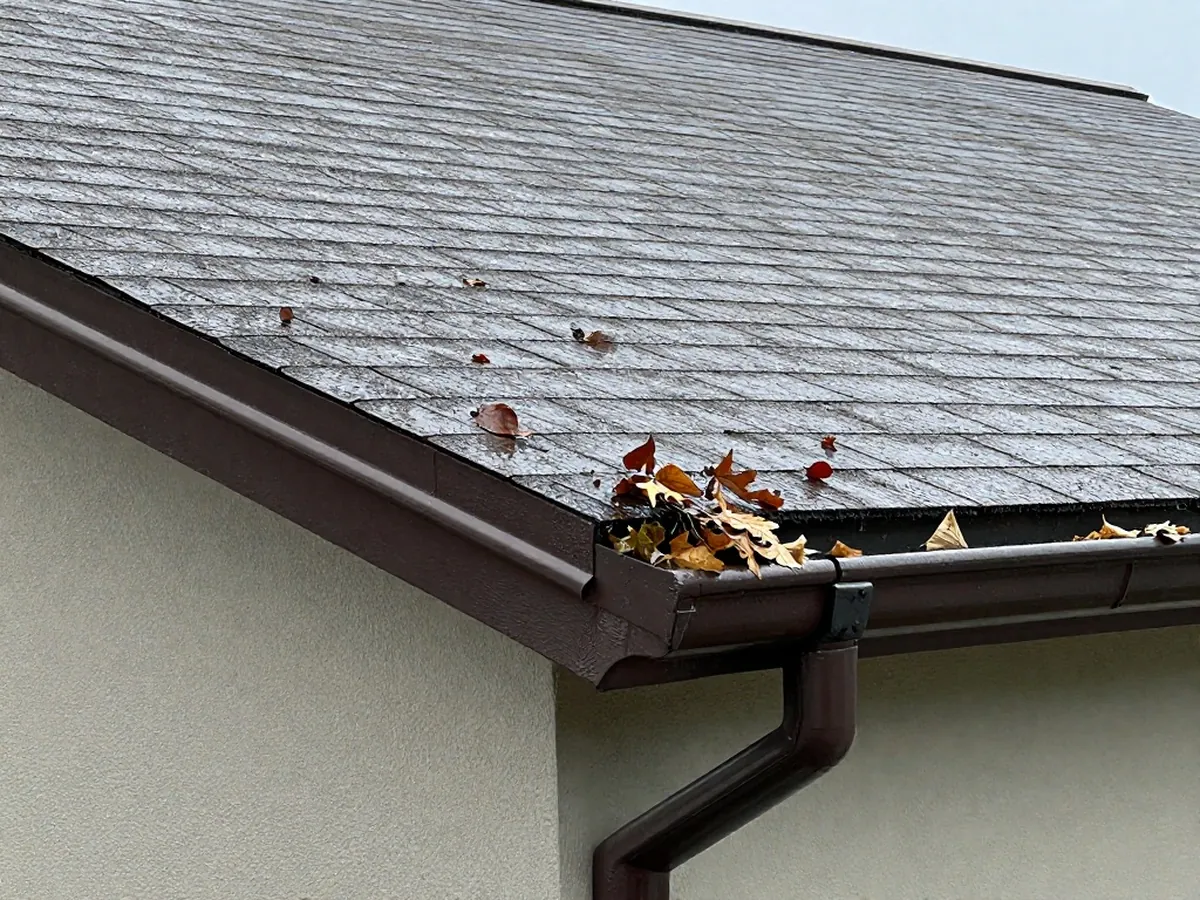
An ice dam has two halves. The roof side is the damage: shingles lifted at the edge, gutters bent, flashing pushed out of place. A roofer can look at those once the ice is gone. The attic side is the cause, warm air escaping upward from the rooms below, and the University of Minnesota's guide puts air sealing ahead of insulation.
If the shingles are worn too, the repair can turn into a roof replacement conversation. Either way, a roof inspection after the thaw sorts the damage from the age of the roof.
Other jobs on the list
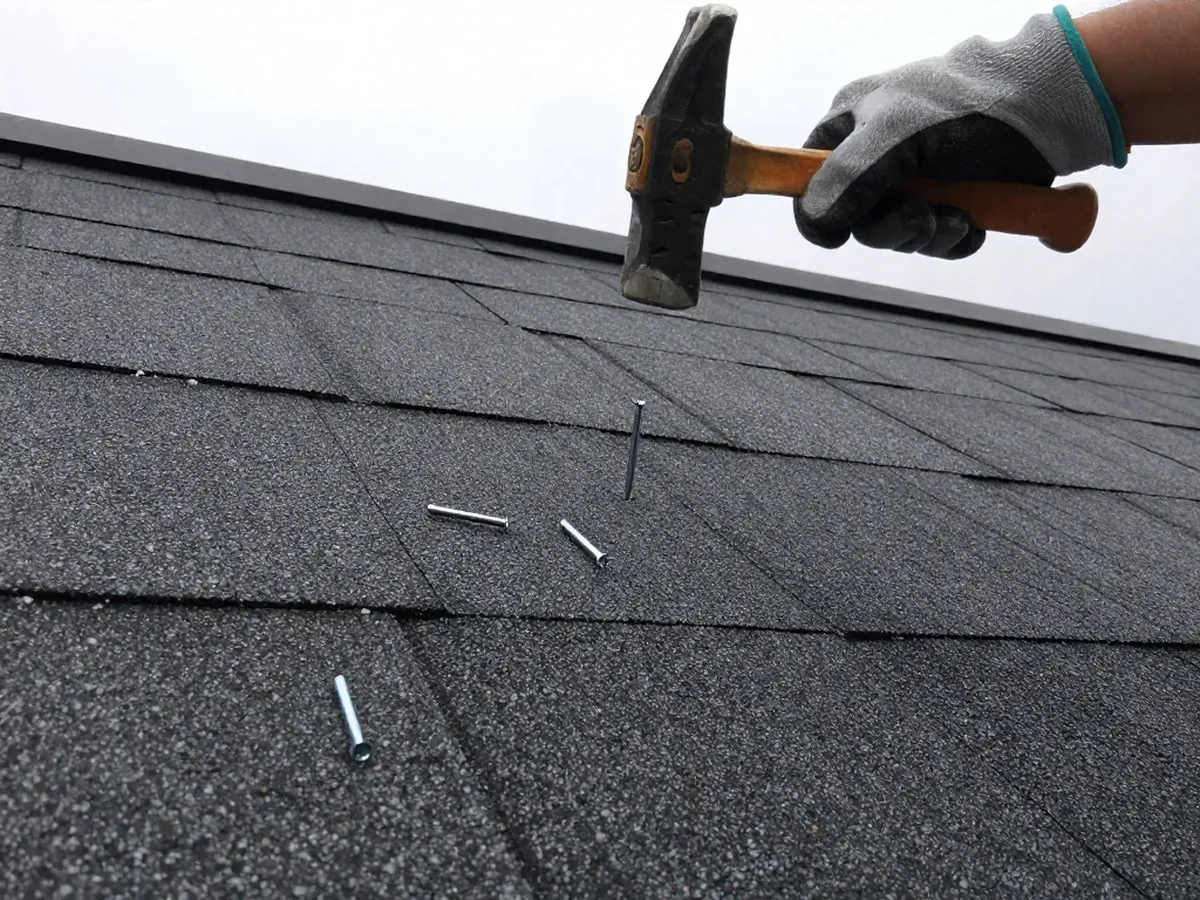
Stains, loose shingles and wind damage in Lyndhurst
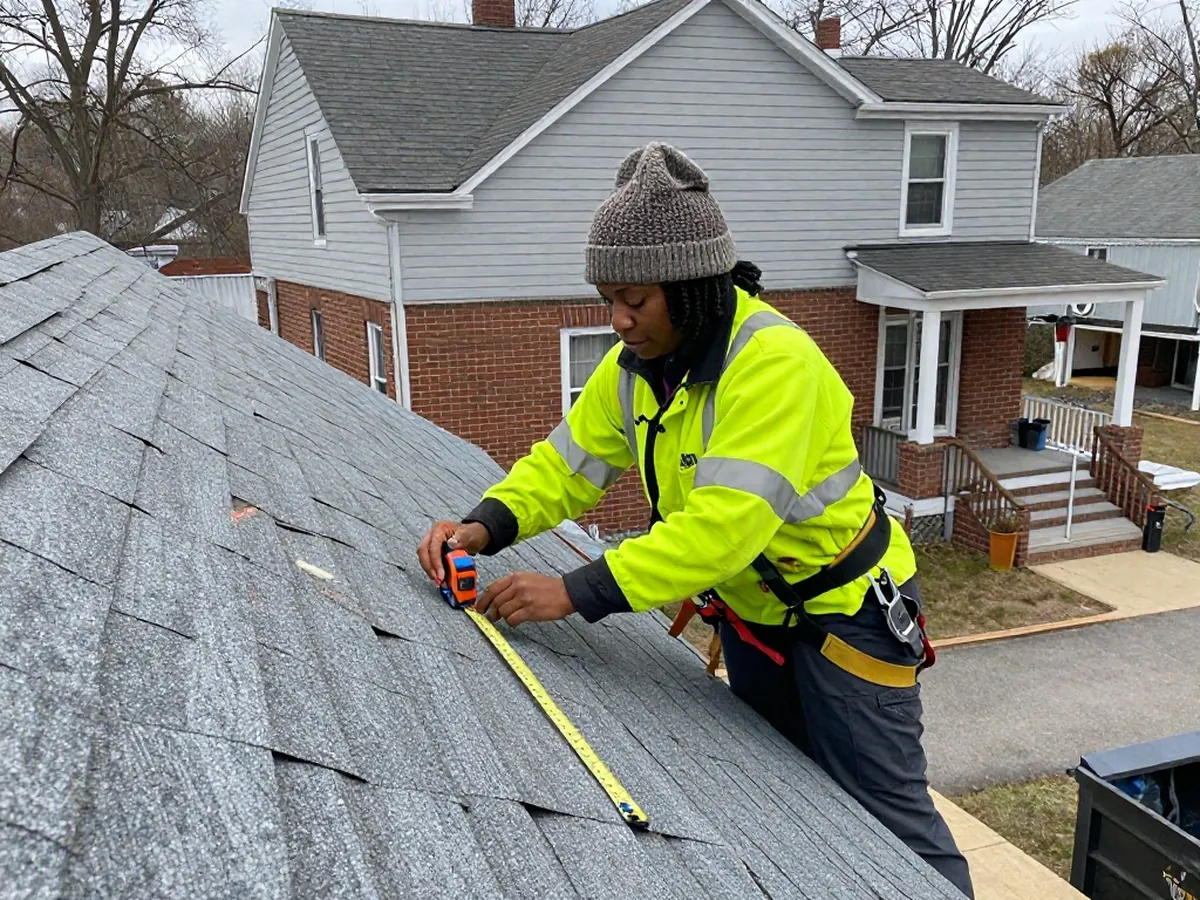
A full roof covering, start to finish, near Lyndhurst
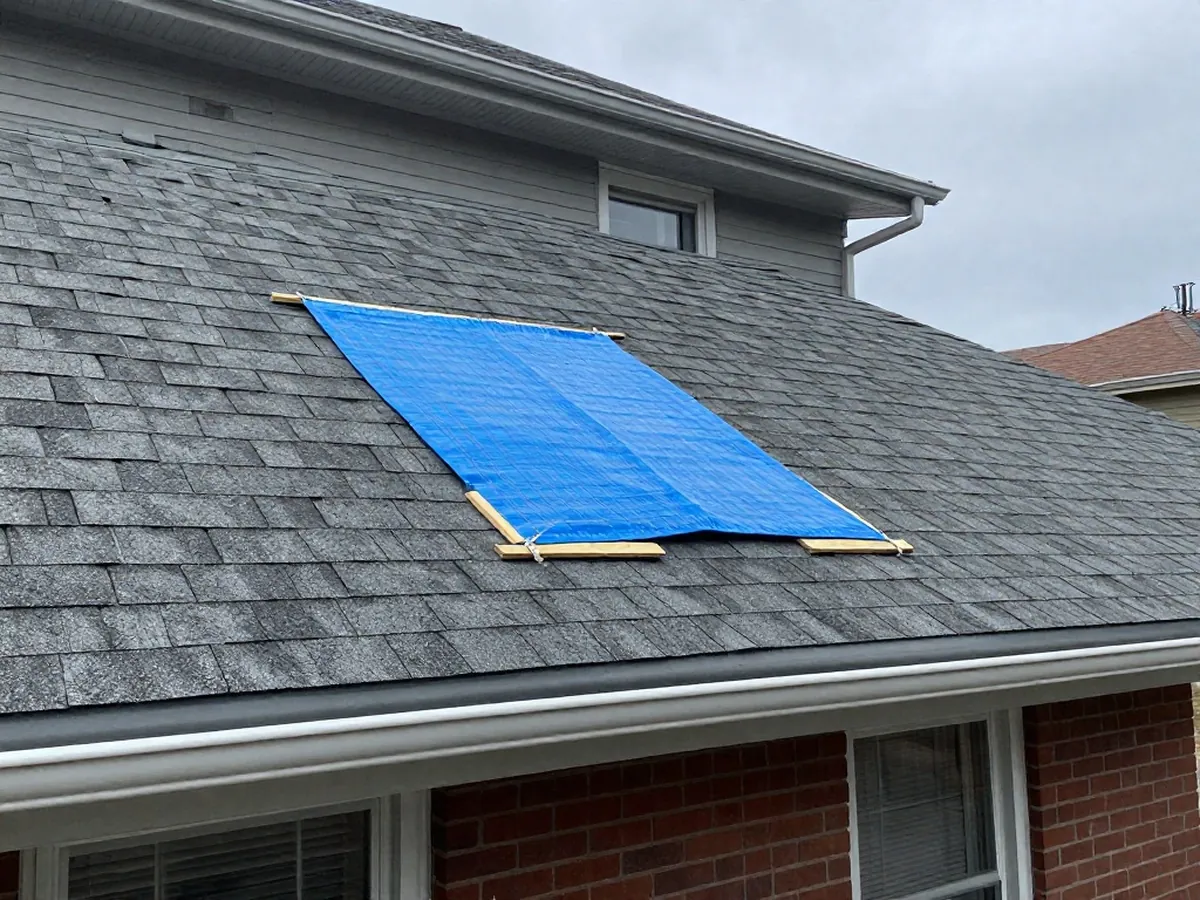
Wind, falling limbs and downpours near Lyndhurst
From
- University of Minnesota Extension, Dealing with and preventing ice dams (reviewed 2022)
- NJ Department of Community Affairs, Bulletin 07-3, Ice Dam Membrane/Ice Barrier (rev. June 2015)
- NOAA NCEI, 1991-2020 U.S. Climate Normals, monthly, Teterboro Airport NJ (USW00094741)
- PSE&G, Downed Power Line Safety
- Asphalt Roofing Manufacturers Association, Assessing roof damage after Superstorm Sandy (7 Nov 2012)
- U.S. Department of Energy, Repairing Roofs and Ceilings technical brief (Jan 2006)
Checked 1 Nov 2026